Chapter 2 of Class Text
Throughout this lecture, you will find games to quiz yourself with. These will not be graded. Have fun with them. Let me know if you like them and if they are helpful. This is new to me as well, so I would appreciate your feedback.
THE DENTAL PRACTICE ACT
The DPA contains the state laws that control the practice of dentistry ONLY within the state with which it is regarding. It contains the requirements for, and the state restrictions upon the practice of dentistry. Over the next week, you will each become very comfortable with the Oregon DPA, which you each picked up from my office during the first week of school. Your exam this week is on the contents of the DPA.
Every state will most likely have its own Dental Practice Act. This means that all of them are not the same. It is each of the dental office team member's responsibility to know how to read and navigate their states DPA, in order to find out what tasks they are legally allowed to perform. Because each team member can have a lawsuit brought against them by a patient, it is best to not rely on another person knowledge of the DPA (or lack there of), to dictate your practices in the dental office.
While the DPA dictates the restrictions and allowances of practice to the dental professionals, the State Board of Dentistry administers the DPA. But who governs the State Board of Dentistry?? The Federal government, which is the master controller of all standards.
The Purpose of each state's DPA is to protect the public from being mistreated or misled by incompetent practitioners. By creating restrictions and requirements for the dentist, patients are ensured that the treatment they receive is safe and that their practitioner is properly trained and certified/ registered/ licensed.
Some of the Provision and Guidelines that the State DPA regulates include –
1. Eligibility, suspension, and revocation of licensure
2. Methods and requirements for licensure
3. Controls for the functions of the auxiliaries
4. Definition of what is included in the practice of dentistry within the state
5. Provisions for establishing and maintaining an administrative Board to supervise the practice of dentistry.

The State Board of Dentistry is also known as the "State Board of Dental Examiners" and is the administrative board of the dental profession and its professionals within each state. They are responsible for administering and enforcing the DPA. For instance, when dental assistants were allowed to do sealants, it was the State Board of Dentistry that made the decision, and who also wrote the specific regulations, requirements, etc in the DPA.
The Primary Functions of the State Board are listed on pg 19 of your text. I will leave you to read through this on your own.
In previous years the Oregon Board of Dentistry was composed of volunteer members appointed by the governor. They were made up of:
6 dentists, 1 specialist, 2 dental hygienist, 1 lay person (regular joe).
In your exam this week, one question you will be looking up is who the current Board members are in your DPA's.
Each Board member serves a four year term, which can be subsequent. All but one board member will work as volunteers and only their expenses will be paid for. There is one paid personal staff member hired by the Board. Other personnel who work on a voluntary basis are:
§ Executive Director
§ Receptionist
§ Administrative assistant (handles certification, license-renewals)
§ Investigators
§ Board attorney from state attorney
§ General's office (on call as needed)
The Board holds meetings monthly for 2 days. The operating costs of the Board are paid for out of the dentist and hygienist licensing fees and dental assisting certification fees.

To be licensed means that you have been given legal permission to engage in a profession or business. Specific to this course is the profession of dentistry. It is important that each professional knows who is required to be licensed and who is not.
§ Who must be Licensed?
1. Dentists and dental hygienist (in the state in which they practice)
2. Dental assistants are not required to be licensed except in some states including Minnesota and California.
a. While most states do not require their dental assistants to be licensed, some do require them to be registered and or certified in order to perform certain functions. An example is the Expanded Function Dental Assistant (EFDA). An EFDA can perform additional tasks in the dental office that a non-EFDA cannot perform.
§ Reciprocity of Licensure
When a dental professional move's from one state to another, their licensing may or may not move with them. Reciprocity is a mutual agreement between two different states, in which they will allow persons who are licensed in one state to receive a license in the other state without further examination.
If a dental professional moves to different state they must apply for a license in that state. Reciprocity does not mean that the professional does not need a current license for their new state of practice, it only exempts them from having to redo their Board examinations.
Reciprocity in one state may cover all aspects of licensure, meaning that anyone who is licensed in a reciprocating state need only apply for their new license for their new state of practice. However, in other states it may not be that easy. While the reciprocity agreement exempts an applicant from taking the written examination for the new state, they must still retake their clinical exams. If I ever choose to move, I think I'll choose only the states that requires no more examinations ;0)!
In each state the Board of Dentistry may suspend or revoke a dentist's license. The DPA for each state clearly states reasons why the Board may choose to revoke or suspends a dentist's license. Please take the time to look this up in your own DPA's.
What is the difference between suspending and revoking someone's license?
1. A suspension may be voted on by the State Board. A suspension means that a dentist may not legally practice dentistry for a specified amount of time.
2. A revoked license is also voted on by the State Board and means that a dentist may no longer legally practice dentistry in that state unless their license is reinstated. However, they may be able to go to another state and practice as long as they are licensed in that state.
If a dentist's license is revoked, they may petition the State Board of Dentistry for a reinstatement. But depending on their offense, reinstatement is not assured.
Some of the grounds for suspension and/or revocation according to and stated in the DPA are:
· Conviction of a crime
· Unprofessional conduct
· Personal of Professional incapacity
o Substance abuse
o Mental limitations
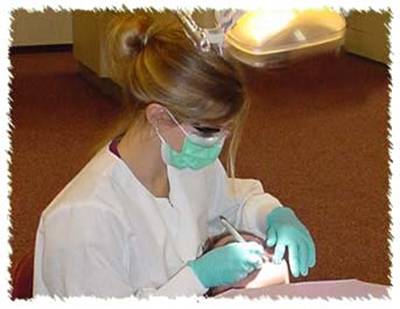

Certification is voluntary. It is a program that verifies standards for qualified dental assistants. Many states do not require that their dental assistants be certified. However, it is recommended and most employees will require that their assistants have their certifications. To become certified candidates must pass the examinations administered by DANB. Once a candidate has passed their examinations they may use the title of Certified Dental Assistant (CDA). To maintain a certification, dental assistants must maintain their continuing education requirements annually. If a person chooses not to participate in continuing education, they cannot maintain their certification and cannot continue using the title "CDA".
DANB administers additional specialty examinations for radiography, infection control, and assisting in dental specialties such as orthodontics. However, not all states accept the tests administered by DANB in order to become a Registered Dental Assistant (RDA). You will want to check with the State Board of Dentistry in whatever state you choose to practice, to see what their requirements are.
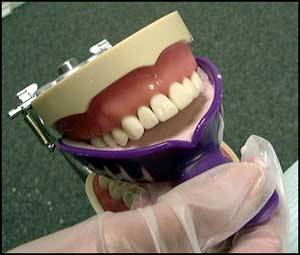

You can imagine how a state would want to maintain some sort of record of the dental assistants that are performing x-rays, impressions, making and placing temporary crowns, etc. in their state for the purpose of regulation. Someone has to make sure that standard of care is being met and if you don't know who all is practicing, how can you monitor standard of care. The answer that some state Boards have come up with in order to monitor the non-CDA, dental assisting professionals in their states is to require that registration. Registration is a legal mechanism the state uses to maintain a list of individuals who are qualified for certain tasks as a dental assisting professional. Not all states require registration, and this is up to the dental assistant to determine in the state that (s)he chooses to practice in.
Registration must be renewed periodically and CE may also be required for renewal of the registration. The dental assistant must be sure to know what is required in order to practice dental assisting in the state they choose to work in.
Registration is required for dental assistants who are exposing radiographs and sometimes is required for those who are performing EFDA tasks in their offices.
Information regarding registration requirements can be found at the State Board of Dental Examiners, and every dental assistant is responsible for knowing the legal requirements surrounding their job.

Respondeat Superior literally translated from Latin means "Let the Master Answer". This means that the employer/dentist is held responsible for the acts performed by employees within the scope of their employment.
For this reason the dentist/employer has right to "direct and control" their employees and is encouraged to do so. As the person held responsible for negligence, harm, slander, invasion of patient privacy and breaking of the HIPAA laws, etc, by his/her employees, you can understand why employers/dentists would want to direct and control the performances of their employees.
When it comes to lawsuits, most patients choose to sue the dentist, assuming the dentist has the assets to compensate them. However, patients can sue the staff member(s) as well if they feel that they performed negligently. It is recommended that dental assistants have minimal Liability Insurance as well as the dentist, in case of law suit.
It is becoming more common for employers to check current and potential employee's online social lives, especially their MySpace and Facebook pages. If an employee chooses to disclose information regarding a patient to their friends on their MySpace, Facebook, etc. page or whatever social network they may use, the dentist is held responsible. Dentists use online social networks to look at potential employees to see what type of person they are and what type of social life they lead. What are their language and writing skills like? What are their ethics and moral standards? Is their site risqué? All of this information helps an employer choose the employee that they think would be an asset to their practice and to their patients care.
Nationwide, there have been many recent lawsuits by employees who have been fired due to the content and discussions on their online social network pages. I am not just talking about the dental field now. Employees feel it is an invasion of their privacy and employers feel it is their right to know what their employers are saying publicly about their workplace. Generally, to date, the law has sided with the employer.
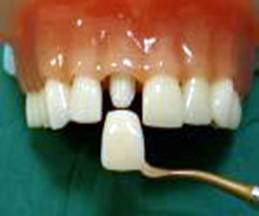
Extended functions are the tasks of greater skill previously performed only by the dentist, but which can now be assigned to the dental auxiliaries who have their EFDA certification. Not all states allow extended functions, so each auxiliary is responsible to know what functions they can legally perform.
For he auxiliaries this provides the opportunity to develop and perform greater skills and with greater skill comes greater responsibility.
It is considered a criminal act to practice expanded functions if you are not qualified and licensed or if those functions are not legal in your state. Persons who function in this capacity are considered "Guilty of Illegal Practice of Dentistry".
Levels of Supervision – please read on your own and also find in the DPA. You will need this information for your upcoming exam.