Nutrition
FN 225

Lane Home


Lecture 6B

Lecture 6A presented some information about protein deficiency and Global Hunger.

Then some numbers were listed regarding Infant Mortality Rates in a few areas around the world.

It's very easy to feel discouraged and hopeless about global hunger.  So here's a wonderful organization working to improve the situation.

World Neighbors

Since its inception in 1951, World Neighbors has changed the lives of more than 25 million people in 45 countries. 
Today World Neighbors works in 18 countries helping people develop, manage and sustain their own programs.   You may be asking why you haven’t heard of World Neighbors.  They are a small organization with an annual budget of about $7.5 million a year.  By comparison Coke, a company I suspect all of us have heard of, had an advertising budget in 2000 of about $277 million/year.

World Neighbors does not give away food or material aid. Instead, it provides training so that people gain the skills and leadership to work together for change. The result is self-reliance, rather than dependence on external aid. 


Their approach is simple. In cooperation with the community where they are working, they:

  • Select the areas of work on the basis of need and opportunity.
  • Listen to what the community has to say and what limits their success and establish a relationship of trust.
  • Help strengthen their capacity to identify, analyze and solve their own problems using locally available resources and the simplest tools to do the job.
  • Try new ideas on a small scale. Stay practical to generate early enthusiasm and success.
  • Help document the results and apply lessons learned to improve programs.
  • Reinforce their capacity to maintain and multiply results and ongoing problem-solving processes by forming new partnerships and by coordinating with additional villages and local organizations.
  • Widen program impact by documenting and sharing the results and processes with larger-scale organizations, villages, networks, coalitions and governments to influence policies and actions.

World Neighbors operates a program for an average of 5 to 10 years. 
As they move to other areas of need, they leave behind a network of leaders with the skills to enable the community to undertake development initiatives on their own.

01.0henrymap

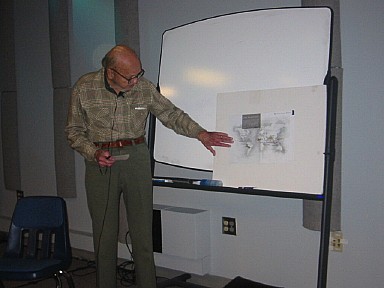
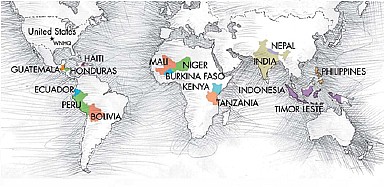
Henry and Beth Tucker have been frequent guest speakers in a nutrition class at LCC.  Here Henry (at age 86!) is explaining where World Neighbors currently works.  Henry is a retired Purdue University chemical engineering professor.
01.1wnmap
Here's another map showing where World Neighbors works.
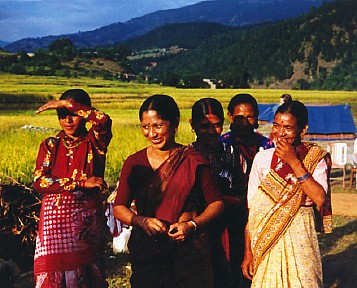
02nepalwalkgreet

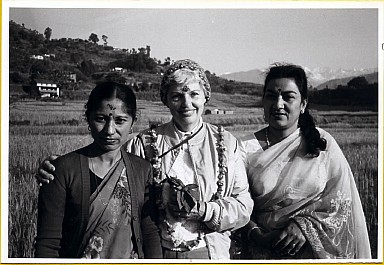
Henry and Beth Tucker visited a World Neighbors project at a village in Nepal in the 1980s.  These are part time health workers who walked from 2-8 hours to welcome them. 
03nepalbethtbday

Later during their visit
Saraswati & Mona helped Beth Tucker celebrate her birthday.


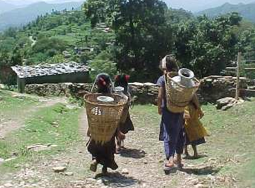
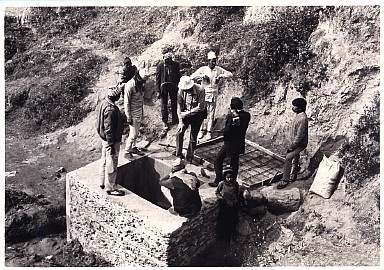
When the Nepalese village had invited WN to help them, they first asked villagers to identify what they'd like help with.  Women in the village told WN that several hours of their 17-hour daily work schedule were spent bringing up heavy containers of clean and safe water for family and animals from the river below.  So WN helped them design a two-mile canal that began upstream toward the Himalayas.
04nepalheadtank

Villagers dug the canal around mountainous terrain and ended it at this concrete tank above the village.

05nepalhenryfaucet

They then dug trenches through rock for the piping to a faucet for every four houses.  (A house in the U.S. might have dozens of faucets inside and out.)  Here is a photo of Henry with Laxmi Majhi at one of the faucets.

Extra water became available for nutritional dry-summer gardens and time was freed up for activities like working together to test recipes for tasty soy foods.

World Neighbors, through self-help principles, has brought water systems to thousands of villagers in remote areas of Nepal.  After 15 years, 97% of the systems are  still operating.  A recent World Bank survey found that well-meaning outsiders have built systems for Nepalese (rather than with them), with 80% becoming inoperative after only three years.

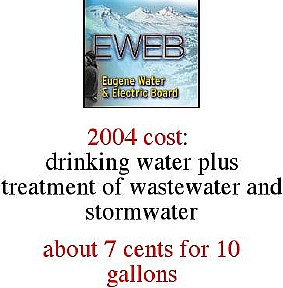
It's easy to take our access to clean water for granted!

09costdrinkingwater_

11.0betharmband

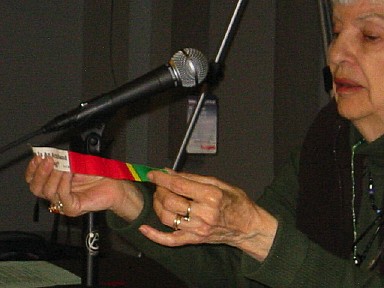
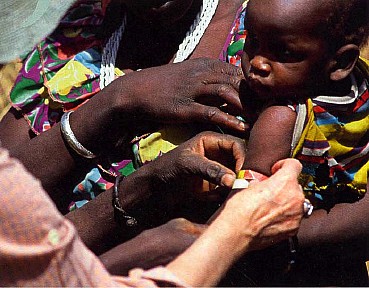
Another program led to an improved soybean crop in Ghana, where perhaps 40% of young children experience mild to serious malnutrition from not having enough food.  Women came together and found innovative ways to use the soybeans in cooking.  Beth explains how a simple plastic arm band was used to measure the increased children's arm size representing a return to health.

11.1armbands

10matchbookbirthingkit

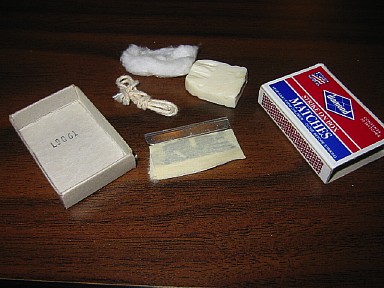
Health trainers train midwives in safe birthing techniques and make available these simple matchbox-size birthing kits.

World Neighbors takes pride that all of their overseas staff and volunteers are now local people from the countries in which they work.  Americans who work for World Neighbors are employed mostly at the World Neighbors headquarters in Oklahoma City.

That was not the case when while on a study leave
in Indonesia in 1990, Beth Naylor had her first introduction to World Neighbors.  A friend suggested she visit Larry Fisher, an American.
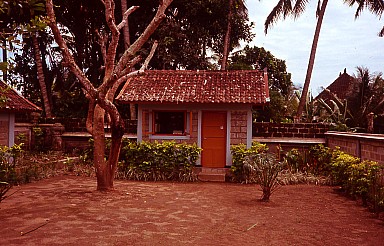
Below was the Southeast Asia headquarters of World Neighbors, in the backyard of Larry's home.
11.2indonoffice


The focus of WN's Southeast Asia programs at the time was work with marginalized upland farmers in:
  • soil and water conservation
  • improved crop production
  • tree planting, and
  • sustainable forest management. 
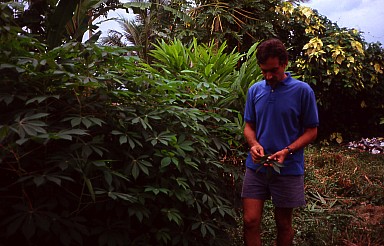
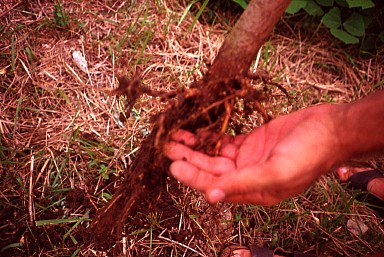
WN's approach was to work directly with farmers, encouraging on-farm experimentation and learning, and the development of farmer-based extension systems, where the farmers themselves assume the leadership roles as extension workers and program managers.  Larry himself continued testing and experimenting with new farming practices on his own small piece of land at home - here he is showing results of improved cassava cultivation.".


And here he's showing nitrogen-fixing nodules important to making nitrogen available in the soil to other crops.


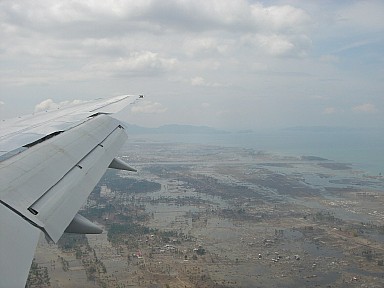
11.4flood

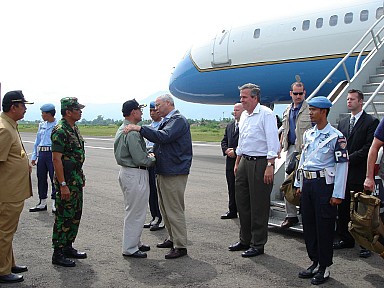
Because of WN's long history of working in Indonesia,and Larry's close work with local communities and facility with the Indonesian language, he was asked to accompany and translate for U. S. Secretary of State Colin Powell when he visited Indonesia's Aceh Province following the 2004 tsunami that killed approximately 168,000 people there.
11.5powellplane


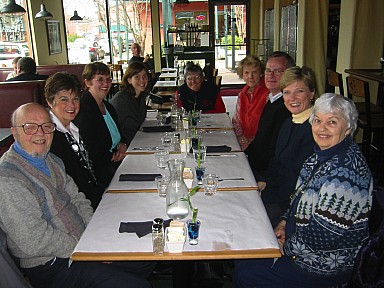
Melanie Macdonald, the CEO of World Neighbors and the first woman to head the organization, visited Eugene one spring. She's the third one from the front on the left.  Before joining World Neighbors, she directed the Canadian Peace Corps for four years.

Gregg Biggs is our World Neighbors contact for the
Western Region.  Although he hasn't been here recently, he was here a number of years ago and has been a guest speaker in this class. You can reach him at:
415-648-9577 or 405-418-0486
gbiggs@wn.org

12allenjohnsoncousar

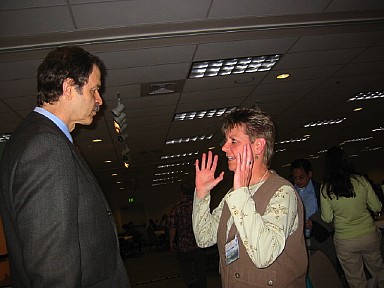
If you're interested in global health, you might like Susie Cousar's class in the Health & PE Department.


Video: An Introduction to Work of Women
a program of World Neighbors
approximately 10 minutes
(below)

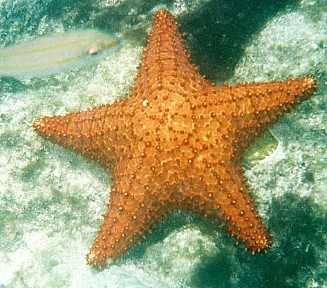
THE STARFISH STORY:
(an inspiration for me about making a difference)
15starfish

There was a young man walking down a deserted beach just before dawn.  In the distance he saw a frail old man.

As he approached the old man, he saw him picking up stranded starfish and throwing them back into the sea.

The young man gazed in wonder as the old man again and again threw the small starfish from the sand to the water.

He asked, "Old man, why do you spend so much energy doing what seems to be a waste of time."

The old man explained that the stranded starfish would die if left in the morning sun.

"But there must be thousands of beaches and millions of starfish!" exclaimed the young man. "How can you make any difference?"

The old man looked at the small starfish in his hand and as he threw it to the safety of the sea, he said,

"It makes a difference to this one!"


Author unknown
/