|
FN 225: Nutrition
Noy Rathakette, Ph.D. Health Professions Division Lane Community College Eugene, Oregon or to post a
question you have regarding the content of the class
or to "reply" to another student's posting.) Active participation in these FORUMs will probably improve your score on Exams.
LECTURE 1B: (a continuation of Chapter
1-Food Choices and
Human Health
III Identifying Valid Nutrition Info in the News: Scientific Research Why do we want to know how to identify valid nutrition info in the news? We want to know how to
identify "valid nutrition info in the news" so
we'll have some idea who to believe.
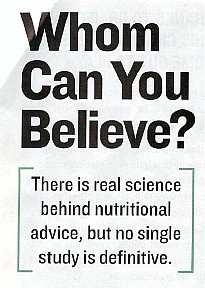 Nutrition Today, September/October 2007 "Twilight of the Gatekeepers: An Uncomfortable Fable" Sylvia Rowe MA and Nick Alexander BA The above article discusses
the explosion of new health and
nutrition-oriented Web sites that may have been created by individuals
or organizations not formally tied to the scientific community. "Internet democracy bestows on these
sites, often
distinguished by a particular political, philosophical, moral, or other
nonscientific point of view, the same importance, credibility, and
prominence as sites formerly regarded as authoritative."
"Just as the Internet has fostered the prosperity of a citizen-based journalism, with a varied and growing assortment of 'news blogs' and the like, so has it encouraged a kind of citizen-based science movement, where publication takes place solely or primarily in cyberspace, where peer review has no accepted place". "There is no denying that emerging computer and Internet technology has opened up a brave new world in which scientists and other thinkers can, with ever increasing speed, share their ideas and research globally. Theories can be analyzed and breakthrough conclusions reached, enhancing human health at a speed and scale never before realized. "There is also no denying that the same technologies are creating a world in which utter nonsense or worse can do a reputable job of masquerading as scientific truth and can recruit hapless believers and followers to intellectual mischief-or worse. "Are we heading toward a world of greater clarity or greater confusion?" I, for one, don't know the answer to that question, but the following are some guidelines to consider when trying to decide if something is valid nutrition information. A. Has Characteristics of GOOD Scientific Research. 1. Researcher (who might not be the author) has good credentials Usually done by someone with a doctorate (PhD) or a master's (MS) in nutrition or another related field or an MD who has advanced training in nutrition. You can usually identify PhDs or MDs with nutrition training by their place of work (a major university with a strong nutrition program or a government agency for nutrition or health). more later in his lecture about places of work........ It's important to ask- Who
paid for the research?
Bias because of who paid for the study doesn't mean it's definitely a bad study, but it's a study that certainly should be repeated to see if someone else gets the same results. I listened to a story on the radio that you can listen to if you'd like: Researchers
Find Bias
in Nutrition Studies by Allison Aubrey, NPR Morning Edition, January 9,
2007 · A new study, co-authored by Harvard researchers and
analysts from the Center for Science in the Public Interest, suggests
there's a systematic bias in nutrition studies funded by food companies.
"Funding Food Science and Nutrition Research: Financial Conflicts and Scientific Integrity", The International Life Sciences Institute (ILSI) North America Conflict of Interest/Scientific Integrity Guiding Principles Working Group, Journal of the American Dietetic Association, May 2009, 929-936. This working group was organized by the non-profit International Life Sciences Institute and was supported in part by educational grants by Coca Cola, General Mills and other companies. ILSL is supported by industry members; government funding; and contributions from charitable foundations, corporations, and corporate foundations. Click here for the working groups members' credentials and places of work. In the conduct of public/private research relationships, all relevant parties shall:
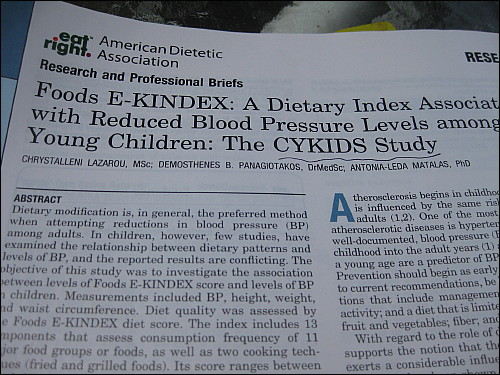 The above study was reported in the June 2009 issue of the Journal of the American Dietetic Association. I like this conclusion from the study: “The most important
implication of the presented results is that health care providers
should focus on modification of whole dietary patterns instead of
changes in the intake of individual foods or nutrients in children."
Notice in the next image the conflict of interest disclosure statement from the E-KINDEX study. 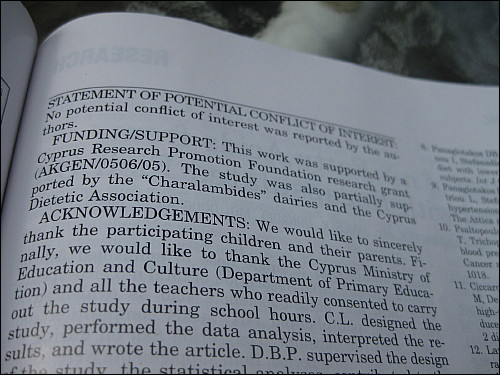  The above study was also reported in the June 2009 issue of the Journal of the American Dietetic Association. Notice in the next image the conflict of interest disclosure statement from the fish oil study. 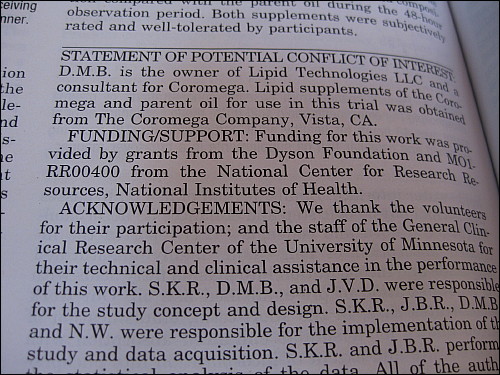 |
(Incidentally, Oregon
Registered Dietitian Jessie Pavlinac [shown below] is the 2009-2010
president of the American Dietetic Association.) Now let's return to some
guidelines to consider when trying to decide if something is valid nutrition
information.
A. Has Characteristics of GOOD Scientific Research. 1. (discussed above) Researcher (who might not be the author) has good credentials 2. When possible, double blind with a placebo and a reasonable number of
subjects were used for a long period
* Definition of placebo- NOT
a real treatment but it might induce body's natural healing process
* Double blind: neither the receiver of the treatment or the giver of the treatment know what the person is getting * Reasonable number: it depends on what is reasonable to do. Ideally, there would be a large number of people studied, but sometimes there's not funding to study a large number. 3. Study results reported so others can replicate
(duplicate) and
reported in respected, refereed (articles evaluated by persons with nutrition credentials) scientific journals |
|
Below is an example of a
respected, refereed scientific journal :
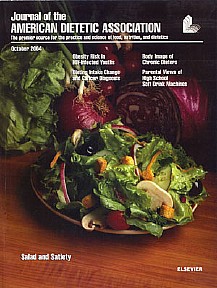 |
Articles on the cover of the
above October 2004 issue of the Journal
of the American Dietetic Association:
Obesity Risk and
HIV-Infected Youth
Dietary Intake Change and Cancer Diagnosis Body Image of Chronic Dieters Parental Views of high School Soft Drink Machines |
|
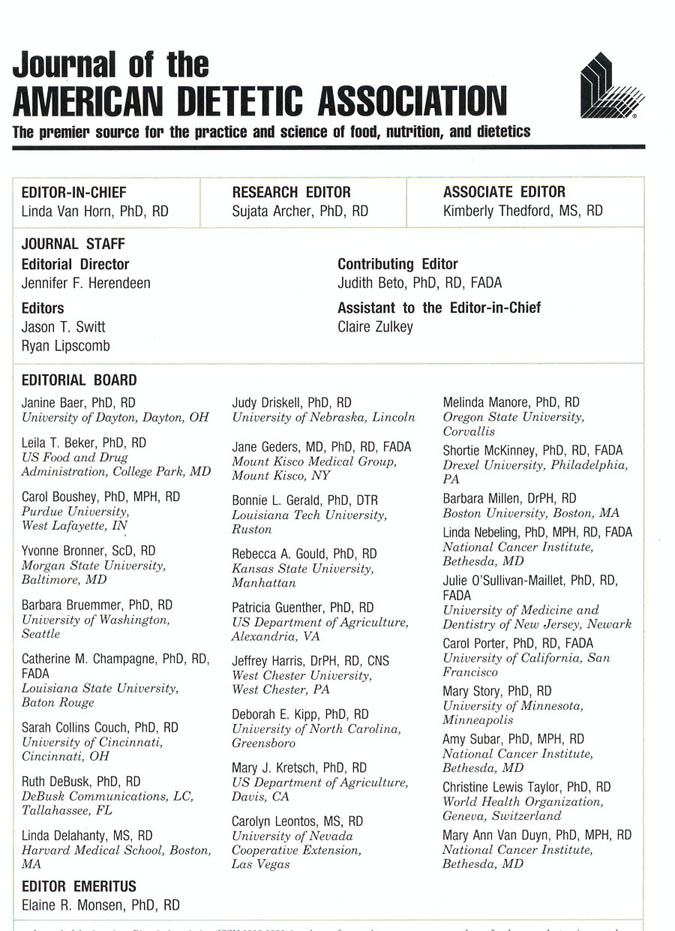
Where in a publication can
you find credentials for "referees"?
usually near the beginning of the publication In this publication, the "referees" are called the"Editorial Board". Notice their credentials (PhD, RD, etc.) as well as their place of work. |
/
Prevention Magazine, December 1980 Editor: Robert Rodale Executive Editor: Mark Bricklin Managing Editor: John Feltman Assistant Managing Editor: William Gottlieb Research Chief: Carol Baldwin Senior Editors: Jane Kinderlehrer, John Yates Associate Editors: Linda Shaw, Kerry Pechter, Tom Voss, Katherine Randall Assistant Research Chief: Carol Matthews Copy Chief: Jeanne Rogers Art Director: Laura Tylersmith Research Associates: Marion Wolbers, Susan Rosenkrantz, Sue Ann Gursky, Martha Capwell, Joann Williams Research Librarian: Liz Wolbach Head Librarian: Janet Glassman Reader’s Service Director: Christy Kohler Beauty Editor: Virginia Castleton Office Manager: Carol Petrakovich Technical Director: Mark Schwartz, PhD Photography Director: T.L. Gettings Photographer: Margaret Smyser What credentials do you see in the above list of editors, etc. listed at the front of a 1980 issue of Prevention Magazine? Now look below at a more recent issue. Prevention Magazine Editorial Advisors (page 20) September, 2004 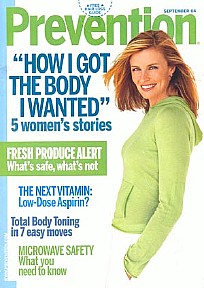 James W. Anderson, MD Professor of Medicine and
Clinical Nutrition, University of Kentucky
College of Medicine
Kelly Brownell, PhDProfessor of Psychology,
Yale University; Director of Yale Center for
Eating and Weight Disorders
Judith Stern, ScD, RDCo-director, Center for
Alternative and Complementary Medicine and
Professor of Nutrition and Internal Medicine at the University of
California, Davis
plus 13 others |
 |
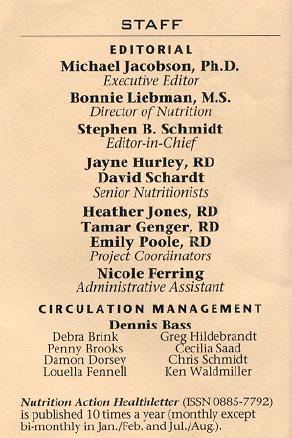 |
| A journal usually is a
primary source of information, while a magazine [or a newsletter] is a
secondary source). What does this mean? A primary source means that the author of the article did the research. A secondary source means that the author is reporting about someone else's research. |
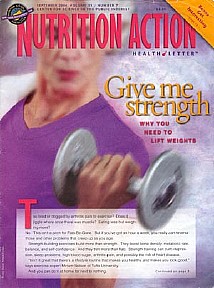
| Looking at the examples of
publications above (Prevention,
Nutrition Action Healthletter and
the Journal of the American
Dietetic Association), which do you think is a primary
source of information and which a secondary source? The "click here" portions of
these lectures are an attempt to make them interactive and engaging,
similar to classroom lectures. It will be difficult to complete
the
lectures and do well on exams if you choose not to "click here".
Click
here if you think Prevention is an example of a
primary source.
Click here if you think Prevention is an example of a secondary source. Click here if you think Nutrition Action Healthletter is an example of a primary source. Click here if you think Nutrition Action Healthletter is an example of a secondary source. Click here if you think the Journal of the American Dietetic Association is an example of a primary source. Click here if you think the Journal of the American Dietetic Association is an example of a secondary source. |
|
4.
Broad generalizations NOT made 5. If research on animals, findings not applied directly to humans 6. If research done on specific segments of population or people living in a clinical setting, it's not applied to ALL people. For example, if a study finds that large doses of vitamin E affect Alzheimer's patients, the researcher or author avoids implying that EVERYONE should take large doses. |
B. If research studies are discussed, they're usually one of the several types of Scientific Research Studies: 1. Case Study- thoroughly studying ONE INDIVIDUAL (sometimes groups). What is the difference between a case study and a testimonial? A case study is done by a researcher and a testimonial is one person describing their experience, but an outside person did not observe them for research. 2. Observational Study- simply monitoring and/or collecting information. No treatment given so NO PLACEBO. COLLECTING INFO 3. Epidemiological Study (another type of Observational Study)- examines a particular large (maybe hundreds or thousands) population to determine what people's health patterns or risk factors have been OR are over time and then this is linked with incidence of disease or other health problems. These people were/are NOT given a treatment. (often retrospective, which means it's looking at the past). Epidemiological studies
(a) look at a large population of people (b) often over a period of time and (c) relate their findings to disease rates (d) NOT given a treatment 4. Laboratory Study- study done under tightly controlled conditions. Since it's difficult to tightly control conditions for humans, these studies are usually done on animals or in test tubes . 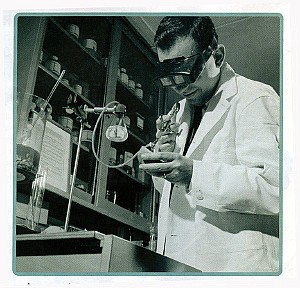 5. Intervention Study- (often called "clinical trials") people ARE given a treatment and the results are observed (prospective, meaning they do something and see what happens rather than looking at something that already happened, which is what epidemiological studies do). Definition of treatment: something given (examples- a nutritional supplement/certain food/advice) OR something done (examples- education or massage or physical therapy). (Write in your notes the definition and
also the examples.)
Study Questions and Exams will ask you to identify the type of study research a particular study is describing. I hope the chart below will help a little. |
| Case Study |
Epidemiological Study |
Intervention
Study |
Observational Study |
|
| SIZE of group |
1
person or 1
grp. |
large
group (maybe hundreds or thousands) |
can be large
group
but not always |
can be large group but not always |
| TREATMENT?
|
no treatment |
no treatment
relate results to disease risk usually collect info over time |
a
treatment (pill,
advice, therapy) often with a control group
who might be given a placebo |
no treatment |
As mentioned above,
intervention studies are often called "clinical trials".
This was a Register-Guard
newspaper ad in April of 2009.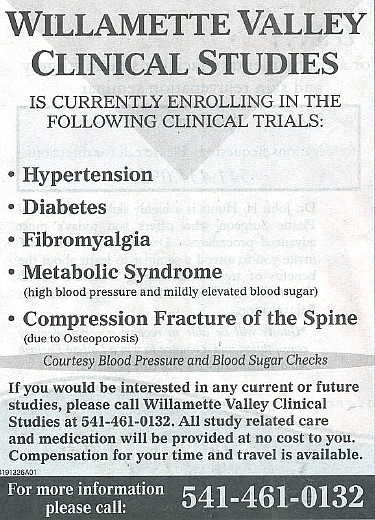 Watch the video clip below to help fill in the next part of the lecture outline in your packet. |
| 12-minute Video
Clip: What Kind of Study Is This? |
| The two browsers that seem to be the fastest ways of
accessing the
video clips are Safari
on a Mac and Internet
Explorer on a Windows-based computer. A dial-up Internet connection is not fast enough to watch many parts of the Lectures. If an approximately 12-minute movie isn't showing up just above on your computer, you may not have the latest version of QuickTime on your computer. Click here to download the newest version of Quick Time. Viewing the video clips works best with the following browsers: Safari if using a Mac
Explorer if using a Windows-based computer I didn't understand why, but Firefox does NOT work. |
| IV
Identifying Nutrition Info that is unreliable (not valid) & that
should make you suspicious "Earmarks"
(markers) of unreliable nutrition
1. Too good to be true 2. Suspicious about food supply 3. Only Testimonials 4. Fake credentials 5. Unpublished studies 6. Persecution claims 7. Authority not cited (Nutrition training not defined) 8. Motive: Personal gain 9. Advertisement 10. Unreliable publication (Unrefereed) OR unreliable Internet site 11. Half truths (logic without proof; in other words part is true & part is false, not known or misleading) |
| EXAMPLE from http://www.wp.com/queen bee (This site no
longer exists) What is Royal Jelly? According to this site, "Royal jelly is the exclusive food of the queen bee. The diet of royal jelly transforms a worker bee into a queen bee. For centuries royal jelly has been used for its extraordinary benefits to strengthen the defense system. " Rochelle Harris, Nutritionist says "I have been a natural food enthusiast for more than 30 years during which time I have used royal jelly for energy, stamina, and strength. The Queen Bee royal jelly has made such a dramatic difference that I now recommend it to all my clients." Why is the information about Royal Jelly an example of a half truth? The half of the Royal Jelly information that is true is that royal jelly IS the exclusive food of the queen bee. The diet of royal jelly transforms a worker bee into a queen bee The half that is false,
unproven or misleading is that it gives benefits to humans.
There is no evidence that it gives energy, stamina, and strength
to humans.
Rochelle Harris gave a testimonial that it helped her. There is no evidence that it does the same thing for humans and the ad didn't cite any evidence. When you hear of something that sounds amazing, you should look carefully for something about it is only half true. This is a very common trick pulled by people trying to sell us something. Something about what they're saying sounds logical so we are inclined to believe everything they're saying, making us willing to spend our money. Royal Jelly info: Give at least 3 reasons why it is unreliable nutrition information. (Use “Earmarks” previously listed.) See if you can come up with
three reasons. If you have trouble, send me (or another student)
a message.
|
|
V 4
Guidelines for Evaluating Nutrition Info on the Web
It is not always easy to determine if information on the World Wide Web is credible. However, using the guidelines below will help you in making that evaluation.
At the end of these 4
Remember to ask yourself:
"Is the Web the best place for this type of information... would a print source or an electronic database be a better choice?" Double check with a Reference Librarian if you are unsure. I'll expand those 4 points for nutrition information: 1. AUTHORITY. To help determine, look for recognized credentials. What does “recognized” mean? An outside organization with rigorous standards (especially for nutrition curriculum) recognize that credential is reliable. Is this a recognized
credential? NTP (Nutritional Therapy Practitioner). In other
words, do organizations with rigorous
standards (especially for curriculum) recognize that credential is
reliable?
When I first saw this a few
years ago, the credential was called CNT (Certified Nutrition
Therapist).
Given by Nutritional Therapy Association http://www.nutritionaltherapy.com/ Notice that the Nutritional Therapy Association is a .com. In other words, it's a for-profit business. That doesn't guarantee that their curriculum is bad, but I am definitely suspicious since nobody but their own business is evaluating the curriculum. You can go to the above site and click on "Nutritional Therapist". Cost of tuition for fall,
winter and spring: $3,300
(Fall: $1100 for 2 weekends
+ 1 conference call
Winter: $1100 for 2 more weekends + 1 more conference call Spring: $1100 for 2 more weekends + 1 more conference call) Cost of materials: I can't tell what is now required for materials. Can anyone else find that info on their website? Hours of Instruction: 6 weekends plus 3 conference calls Credentials of Eugene Instructor: no evidence of education or training besides the NTP credential given by the same business that employs her. Who evaluates their
curriculum?
I can find no evidence that
an outside organization evaluates their curriculum and recognizes the
NTP credential.
Click on this
website: Fats of Life http://www.fatsoflife.com
Click where it says ABOUT US. Do the editor and the Scientific Advisory Board have recognized credentials and advanced training and places of work in the field of nutrition?
Look at these two websites:
Nutritional Therapy Association http://www.nutritionaltherapy.com/ . Fats of Life http://www.fatsoflife.com
Michael Scott of The Office:
"Wikipedia is the best thing ever. Anyone in the world can write
anything they want about any subject, so you know you are getting the
best possible information." Click
here to watch the clip which lasts just about 10 seconds.
4. CURRENCY. When was the site created? Before you leave this lecture, you might want to do the Google search described in Study Question #42 on page 22 of your packet. It says: Think of a question you have about nutrition and ask that question of Google (http://www.google.com/). Based on the 4 Guidelines above (AUTHORITY, OBJECTIVITY, ACCURACY and CURRENCY), briefly evaluate TWO of the links that Google suggests. You will be asked 3 things:
200 IU
(5 micrograms) if 19-50 years old
400 IU (10 micrograms) if 51-70 600 IU (15 micrograms) if 70+ years old years old 40,000 IU is 100 times the 400 IU recommendation Jen Ferro, one of the LCC librarians found this link: (If you have trouble viewing
the 5
minute screencast, you may need to update
the Flash player for your browser.)
"Evaluating Scholarly Content Online" from the University of California- Berkeley Libraries. It covers: What scholarly information is
Why scholarly information is important How to recognize scholarly information online The End of
Lecture 1B
|