|
FN 225: Nutrition
Teresa McFerran Health Professions Division Lane Community College Eugene, Oregon There is an EXAM
this week DUE Thursday
There is an Exam 3 Study Guide posted in week 6 of moodle. If you do not meet the exam deadline, as of the
following Monday,
you may take a makeup exam at the Social Science
Testing Lab on the LCC Main Campus. Students
taking this exam in the Testing Lab are allowed to use
only ONE 3 x 5
notecard (both sides). I will also be posting an exam question based on the forum discussions for lipids and protein (week 5 and week 6 forums). 1.
How can you apply the information given in
either the lecture this week or the local food
resource?
2. How have your nutritional habits changed since you've been taking this class? 3. Looking at your diet analysis printouts, what vitamin did you get the least of? What percent of the recommendation did you eat? What is a realistic dietary change you could make to get more of this vitamin?
LECTURE 7A:
Vitamins & Minerals- part 1
Use this information
to start filling out the lecture outline for Week 7
& 8.
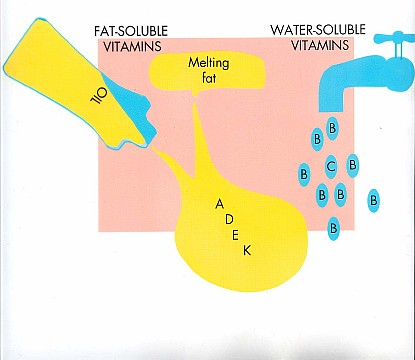
A vitamin is defined as an essential non-caloric organic nutrient needed in tiny amounts in the diet. As you learned in Week 1, vitamins are organic and DO have calories, but they don't have calories for us because we don't make the enzymes we'd need to break vitamins apart to release the energy. So that's what I mean by non-caloric. There would be very little energy there for us anyway- GRAMS of starch, sugar and fat give us a lot more energy than MILLIGRAMS of vitamin C. And we need that vitamin C for important functions in the body. A mineral is defined as an essential non-caloric inorganic nutrient also needed in tiny amounts in the diet. Vitamins can be divided into 2 categories:
Minerals are
absorbed directly into blood and are always
water-soluble. Examples of minerals include
iron, calcium, zinc, magnesium, potassium, sodium,
chloride, fluoride, manganese, phosphorus and
selenium.
Minerals and
water-soluble vitamins are absorbed directly into
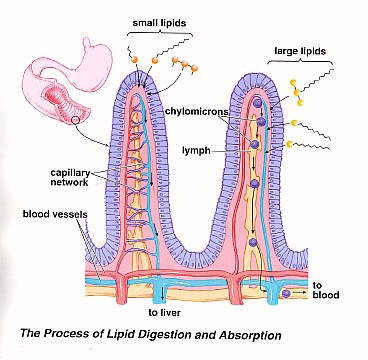
blood. Fat-soluble vitamins are
absorbed into the lymph.
You saw the above
image earlier in the term. It shows why
vitamins are organic (contain carbon to carbon
bonds) and minerals are inorganic.
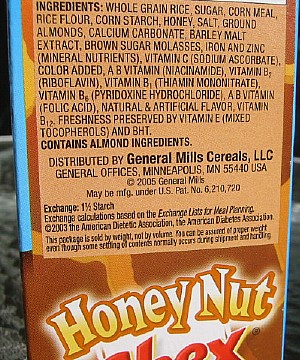
Looking at the Ingredient list for Honey Nut Chex cereal, which ingredients are:
|
| Minerals are different than vitamins because they are
INorganic, therefore they don't have calories. Also
minerals are always absorbed directly into the blood. Back to vitamins.... Vitamin A and vitamin C are both organic. But Vitamin A is a fat-soluble vitamin so it is absorbed into the lymph, and travels with a carrier and is stored. Vitamin C is a water-soluble vitamin so it is absorbed directly into the blood, travels without a carrier and is not stored. Plants get vitamins by making them because they need them to function. Many of the vitamins that plants make are actually antioxidant pigments that they make to help them with photosynthesis. And each plant has its own set of pigments that it needs. A plant making orange carrots needs carotenes while a plant making cream-colored parsnips needs flavones. Parsnips Antioxidants

in Photosynthesis and Human Nutrition, Demmig-Adams,
Barbara;
Adams, III, William W. Science; 12/13/2002, p2149, 5p.
The harnessing of solar energy by photosynthesis
depends on a safety valve that effectively eliminates
hazardous excess energy and prevents oxidative damage
to the plant cells. Many of the compounds that protect
plant cells also protect human cells and have a role
in human nutrition.
Vitamins can be made in the body in 2 ways. One way is from precursors, which are something that can be changed into an active vitamin. For example, niacin can be made from the amino acid tryptophan. |
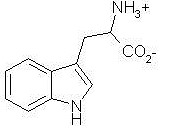
| Tryptophan (above) | Niacin |
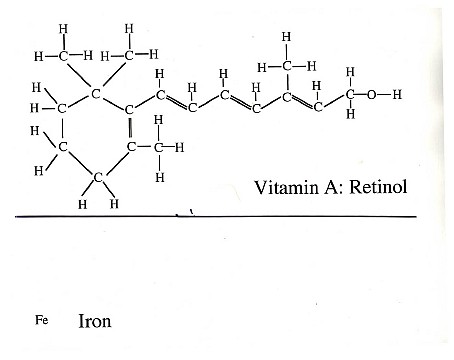
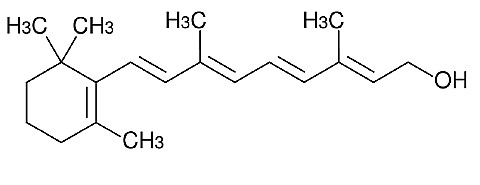
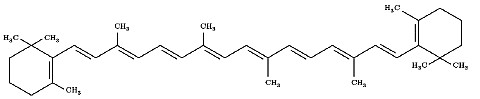
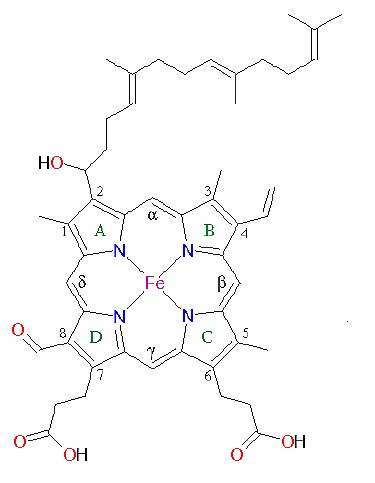
| Retinol (the active form of Vitamin. A) can be made from beta-carotene in plant food. |
| |
|
| Retinol | Beta-carotene |
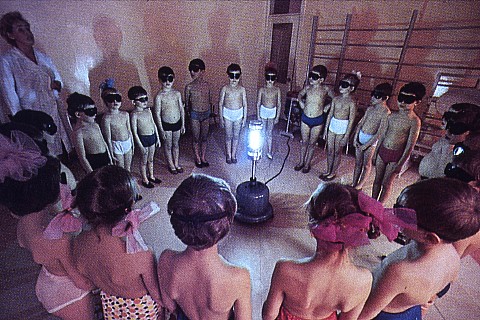
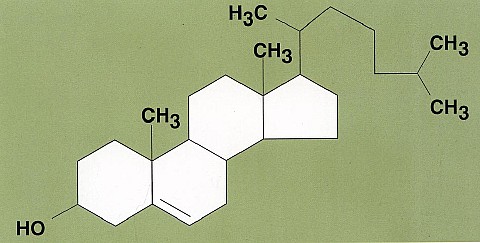
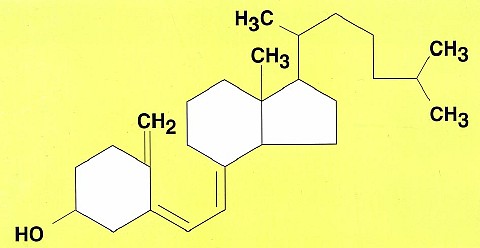
| Vitamin D can be made
when ultraviolet light in sunlight
strikes cholesterol in the skin. So cholesterol,
which our body can make, is a precursor for vitamin D.
These children in the country of Georgia (near
Russia) are making vitamin D. |
| |
|
| Cholesterol | Vitamin D |
| A second way our body can
make vitamins is by letting good bacteria live within us
since bacteria in our intestinal tract can make vitamin K
and also biotin and pantothenic acid. Do you see on
the list above what kind of nutrients biotin and pantothenic
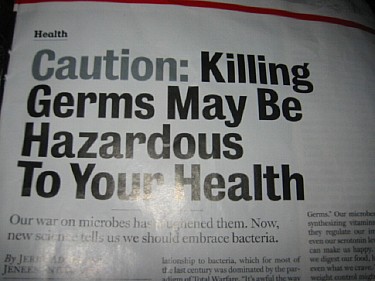
acid are? Gut Flora?
Great!, Maintaining a balance of microorganisms
can help strengthen your overall health, Mary
Carmichael, NEWSWEEK, Jan 23, 2006.
|
| So now we're ready to move
on to THE NUTRI-CHARTS
in the lecture outline. These charts take sort of a "Three Bears" approach to vitamins and minerals as I have always loved their story. Of the three bowls of porridge Goldilocks came upon, one was too hot, one was too cold and one was just right. So we'll look at what happens when there's too much of a nutrient, too little of a nutrient and just the right amount of a nutrient. NUTRI-CHART 1 lists the Nutrients Involved that can be ANTIOXIDANTS. Antioxidants protect cell substances from damage by oxygen. Oxygen (O2)
can combine with substances, forming free radicals
(unpaired electrons), which damage cell
substances.
Remember when you saw the little animated "movie" about covalent bonding earlier in the term? Unpaired electrons are "anxious". They go hunting for electrons to complete their outer shell. Unpaired electrons can grab from where they shouldn't, which can damage cells. Antioxidants seem to be
able to "scavenge & quench" free radicals & may
offer some protection against cancer and effects of
aging. Studies showing benefits of
antioxidants have been done on antioxidants
in foods, not antioxidants in
supplements.
Take a look at how these charts are organized.
The column on the left shows the nutrient. Then the next column describes a little of what happens in the body when there's TOO MUCH of that nutrient in the body. The next column describes a little of what happens in the body when there's TOO LITTLE of that nutrient in the body. The next column describes a little of what happens in the body when there's JUST the RIGHT amount of that nutrient in the body Beta-carotene is changed slowly in the body to retinol, so TOO MUCH beta-carotene (from food) is not toxic. Sometimes babies get very enthusiastic about carrots and winter squash and they may get excess carotene, but it doesn't have toxic effects. Their skin may turn slightly orange, but it isn't dangerous. |
| TOO LITTLE beta-carotene
in the diet/body may elevate cancer risk. JUST the RIGHT amount of beta-carotene can be changed in the body to retinol and then it can perform the functions of vitamin A. Beta-carotene has functions as an antioxidant in the body that retinol cannot accomplish. |
| Moving on to vitamin
E, TOO MUCH vitamin E can increase
the effects of (interfere with) anticoagulant
medication, including aspirin, risking uncontrolled
bleeding. Since vitamin E is transferred from the mother to the fetus late in a pregnancy, premature infants can be born with TOO LITTLE vitamin E. Without vitamin E's antioxidation, some blood cells rupture when oxidation destroys the cell's membrane. JUST the RIGHT amount of vitamin E is an antioxidant for cell's lipids and proteins, especially those in the lungs and red blood cells because lungs & RBCs have high oxygen concentrations. |
| TOO MUCH vitamin
C in the body can interfere
with medical tests. TOO LITTLE vitamin C in the body can suppress the immune system. JUST RIGHT amounts of vitamin C in the body means the vitamin C can be an antioxidant and protect cell substances by becoming oxidized itself. |
| TOO MUCH selenium
(a mineral) in the body can
lead to nausea and liver damage. TOO LITTLE selenium in the body can cause an uncommon form of heart disease. JUST RIGHT amounts of selenium in the body means the selenium can play an antioxidant role by assisting vitamin E. |
| NUTRI-CHART 2
lists the Nutrients Involved in CERTAIN SPECIALIZED
CELLS/TISSUES Let's do the JUST RIGHT part of vitamin A first.
|
| With there is
TOO LITTLE vitamin A in the body, the cells
make a dry, hard protein called keratin (NOT the same
thing as carotene, even though those words sound a lot
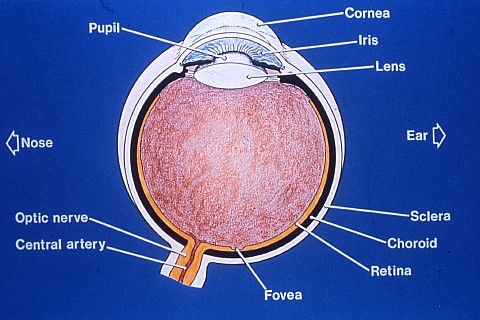
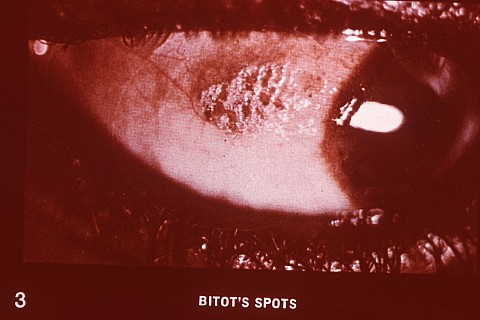
alike). A person can become blind when keratin builds up in the cornea, shown below in the Bitot's spots. A person is more vulnerable to lung infections when deficient in vitamin A because keratin builds up preventing the lungs from expelling harmful substances. And
a person without enough vitamin A can become night
blind because retinol is needed for the eye to see in
dim light. (There are MANY other reasons a
person might be night blind besides vitamin A
deficiency.)
TOO MUCH vitamin A in the body is very toxic. |
|
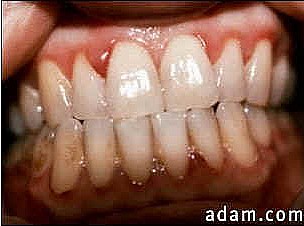
JUST RIGHT amounts of vitamin C in the body helps you make collagen, the main protein that makes up connective tissue. Connective tissue has structural and supportive functions which are indispensable to blood vessels and all tissues within the body. This is one reason vitamin C can help you heal. TOO LITTLE vitamin C in the body can lead to connective tissue problems in the gums and also the blood vessels. Two of the classic symptoms of scurvy (vitamin C deficiency) are a type of gum disease and parafollicular petechiae (pinpoint hemmorhages underneath the skin). |
| JUST RIGHT amounts of Vitamin
D in the body affects how
cells grow, proliferate & specialize. Can help keep
cells from becoming malignant or have autoimmune responses
& when do go bad, perhaps causes them to
self-destruct. Vitamin
D may help battle breast cancer, By Marilynn
Marchione, The
Associated Press, in The Eugene Register-Guard,
:May 16, 2008
Vitamin D is found in many fortified foods, such
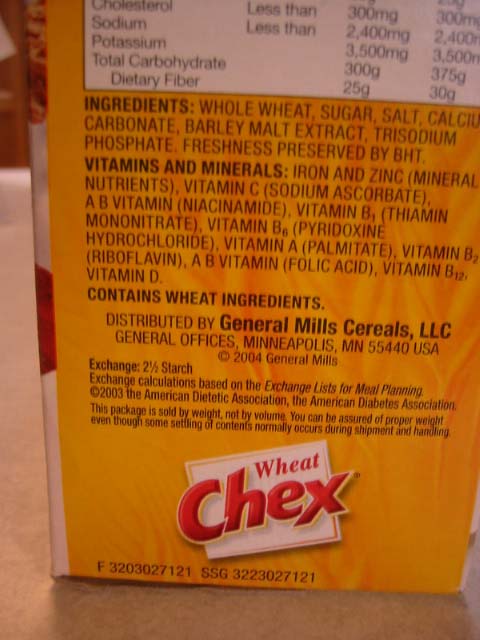
as Wheat Chex cereal. But if it only lists Vitamin D as an
ingredient, it is probably NOT Vitamin D3.Part of what this
article says is:
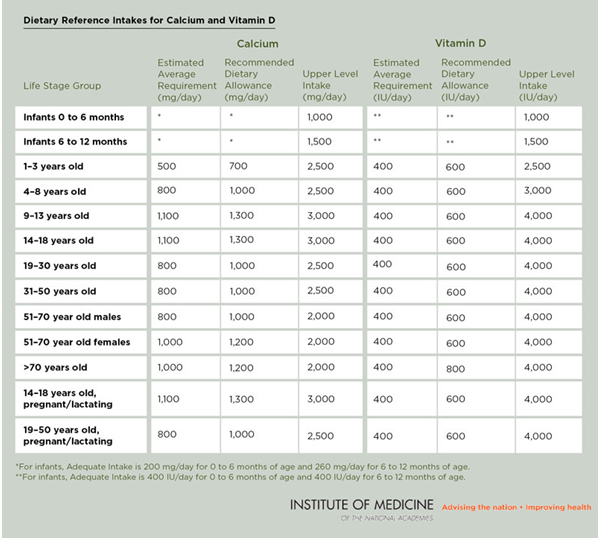
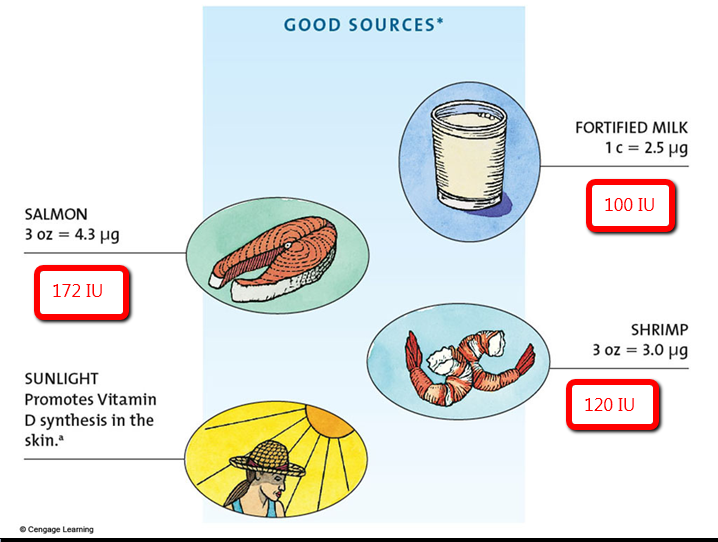
"The skin makes vitamin D from ultraviolet light. Too much sunlight can raise the risk of skin cancer, but small amounts — 15 minutes or so a few times a week without sunscreen — may be beneficial, many doctors believe. "While the vitamin is found in certain foods and supplements, most don’t contain the best form, D-3, and have only a modest effect on blood levels of the nutrient." TOO LITTLE vitamin D in the body may increase risk of a variety of diseases. TOO MUCH vitamin D in the body can lead to calcification of soft tissues like the heart, blood vessels, lungs and kidneys. Lately there has been a lot of attention and propaganda circulating around Vitamin D and it has been portrayed as the miracle Vitamin that may help fight many diseases beyond bone health. To help clarify a lot of conflicting messages that have been circulating about Vitamin D, the Institute of Medicine (IOM) updated the nutrient reference values (DRIs) for both calcium and Vitamin D. The IOM found evidence supporting a role of vitamin D and calcium in bone health, but not in other health conditions. They also challenged the idea of "more is better," and indicate that too much of these nutrients may be harmful. Remember from Lecture 2A, Vitamin D is one of the key nutrients mentioned in the 2010 Dietary Guidelines for Americans for which the typical American's intake falls short (remember the others are fiber, calcium, and potassium.) One aim of the Dietary Guidelines is to help Americans increase their intake of foods that contain vitamin D.
Food
Sources of Vitamin D Looking at the above food sources do you think you get enough Vitamin D from foods? If not, what kind of dietary changes could you make to increase your food intake of Vitamin D? |
| Before continuing with the remainder of Lecture 7A, watch the video below. |
| Video Clip: Supplies The
Most Nutrients approximately 10 minutes Most Nutrients video |
| Now continue below with the remainder of Lecture 7A. |
| NUTRI-CHART 3
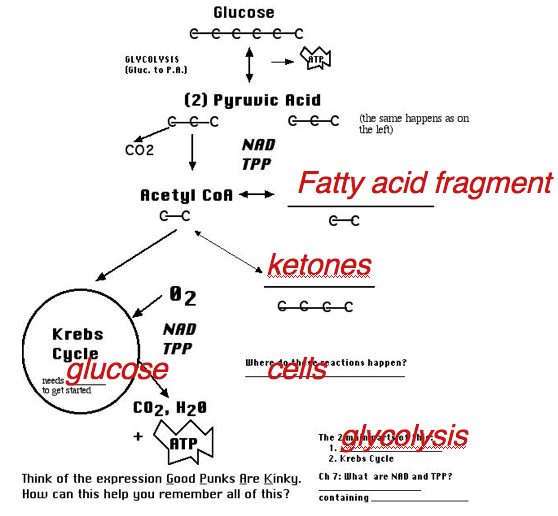
lists the Nutrients Involved in ENERGY METABOLISM There are 5 B-complex vitamins involved in energy metabolism. These are thiamin, riboflavin, niacin, pantothenic acid and biotin. Return to the below document that was posted in an earlier week in moodle, where by now you should have filled in most of the blank lines. ![]() The 5 B-complex vitamins function as part of coenzymes for cellular respiration. This means that they help the enzymes bring about the reactions that release the energy from glucose (or from fat or protein). What are NAD and TPP? NAD and TPP are coenzymes
containing B-vitamins.
NAD stands for (niacin adenine
dinucleotide, so the B-vitamin that coenzyme contains
is niacin. TPP stands for thiamin pyrophosphate
so the B-vitamin it contains is thiamin.
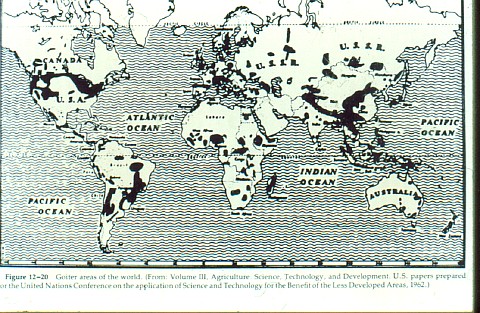
Without any of those 5 B-complex vitamins, cellular respiration couldn't happen in the body. Fatigue, and eventually death, would be the result. It would be like having no way to strike a match for (or otherwise start) a fire. You could have a large woodpile, but you couldn't get heat from that wood. In addition to those 5 B-complex vitamins, 1 other vitamin is especially important for energy metabolism to happen and that is vitamin C. What vitamin C helps produce is thyroxin, a hormone that helps regulate the basal metabolic rate. Someone with a low BMR would be sort of like a really wimpy fire that burned slowly. Iodine (I), chromium (Ch), manganese (Mn) and phosphorus (P) are minerals that are important for the reactions of cellular respiration to happen. The map below shows "goiter belts", areas of the world where, for some reason, iodine has been scrubbed from the soil, perhaps because of volcanic or glacier activity. As part of cytochromes, iron (Fe) is a coenzyme involved in energy metabolism. |
| NUTRI-CHART 4
lists the Nutrients Involved in BLOOD HEALTH Some of the MINERALS involved in blood health include iron (Fe.... that stands for ferrous), zinc (Zn) and copper (Cu.... that stands for cupric).
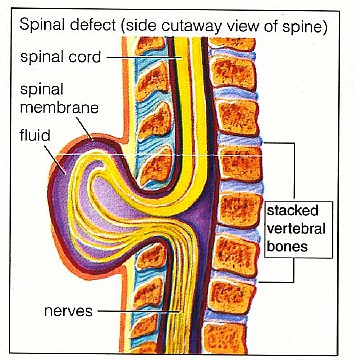
TOO MUCH folate may accelerate growth of cancer cells but TOO LITTLE folate during pregnancy can lead to neural tube defects in the newborn, like spina bifida (Latin for "split spine"). Although surgery can improve the situation, some aspects of the condition is permanent. Absorbing vitamin B12 requires the intrinsic factor, something that is made in the stomach. Low stomach acid, known as hypochlorhydria, interferes with the absorption of vitamin B12. Aging is associated with a decrease in the normal secretion of stomach acid. As a result, some older people with normal levels of intrinsic factor and with no clear cause for malabsorption will become vitamin B12-deficient. A "megadose" level of vitamin C is often considered to be an amount that is 10 times (1000%) of the RDA. Most animals make their own vitamin C from glucose. Vitamin K helps make the proteins needed for blood to clot. With a deficiency of vitamin K, blood doesn't clot. END OF LECTURE 7A
NUTRI-CHARTS 5 and 6 will be next week (Week 8) |