
Module 4: Social Structure and Subsistence Strategies
Lecture 4A: Bands
Lecture 4B: Tribes
Lecture 4C: Chiefdoms
Lecture 4D: States
Bands, Tribes, Chiefdoms, States
Early hominid cultures discussed in the last module were typically what we call 'Band Level' societies. These are small, structurally simple social groups. Through time humans migrated across the planet and populations grew. Typically, as populations grow, cultural interactions become more complex, communities become more sedentary, there is an increase in specialization of occupation, subsistence production becomes more intensified, society becomes more socially stratified (less egalitarian), and ruling bodies become more centralized.
To be able to discuss how complex a society is, Elman Service came up with four levels or categories of social complexity. He defines cultures as being organized into either BANDS, TRIBES, CHIEFDOMS, or STATES. There are two important points to remember about these categories. First, not all cultures will fit neatly into these categories. So we assign cultures to these categories based on the best fit. Second, while many cultures do gradually move from Band to State level societies, many do not have the need to become more complex, and a few might even move in the other direction. So try not to think of increased complexity as 'progress'. After all, complex civilizations come with a host of problems that smaller societies often don't need to worry about: crime, over work, poverty, slavery, the draft, taxes, legal control, inequality, crowded streets, waste management, and infectious disease.
So lets expand on the definitions in your text to get a better feel of what bands, tribes, chiefdoms, and states are like.
Lecture A) BANDS:
Bands usually consist of less than 100 individuals aggregating at any one time. Bands are entirely kin based. The only organizational unit is the family. Other than kin groups there are no subgroups within the band; there are no clubs, affiliations, teams, guilds, or common interest associations.
Subsistence in band level societies is exclusively HUNTING AND GATHERING. Bands travel across their landscape making seasonal rounds to collect various resources. During seasons when there is plenty of food, the entire band may aggregate to work and eat together, to exchange stories, to perform ceremonies, make decisions, and to find marriageable partners.
During unfavorable seasons, the group will disperse because there is not enough food to support everyone in one location. If the environment is extremely harsh, they may even divide into family units for part of the year.
When dispersed, each family must take care of all of their own needs, including spiritual needs. For this reason, bands have what we refer to as INDIVIDUAL CULTS. Individuals know how to take care of religious matters, such as preying and preparing for a successful hun and curing minor maladies. Families will have to know some basic herbal knowledge and first aid. Simple magic spells and totem effigies will have to be produced while away from the rest of the band.
While on their own, each family must provide entirely for themselves. This is extremely precarious in hunter/gather societies. When aggregated in larger groups, hunter/gatherers can share resources through a system of RECIPROCITY. When one hunter has a run of bad luck, others will share their food with that family. It is understood that the favor will be returned when another family is in need. When families are on their own, there is a risk of starvation.
Band level societies are extremely nomadic. For this reason, there are no permanent structures. Property is limited to a few personal, portable items and there is no personal land ownership. Heavier items, such as ground stone mortars and pestles, are cached at each seasonal location.
Bands are egalitarian societies. Decisions are made and disputes are settled as a community, with women and men both having a say. There are no political or religious leaders, but some individuals may have a CHARASMATIC INFLUENCE over the group. Any person who has a slightly higher status than the rest of the group has done so through ACHIEVED STATUS. That is to say, if they have more sway in the decision making process, it is because they have earned it through bravery, skillfulness, age, or simply their powers of persuasion.
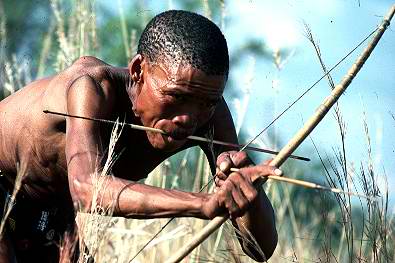
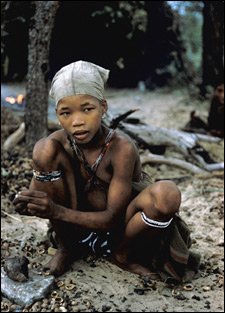
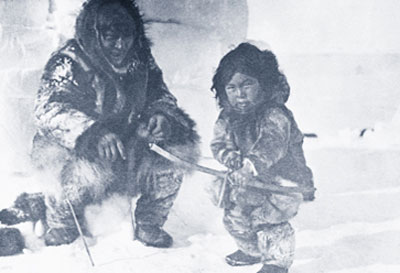
Modern cultures that are band level societies include the Eskimo (Alaska), the Inuit (Northeastern Canada), the Hadza (Tanzania) and the !Kung (Kalahari Desert).